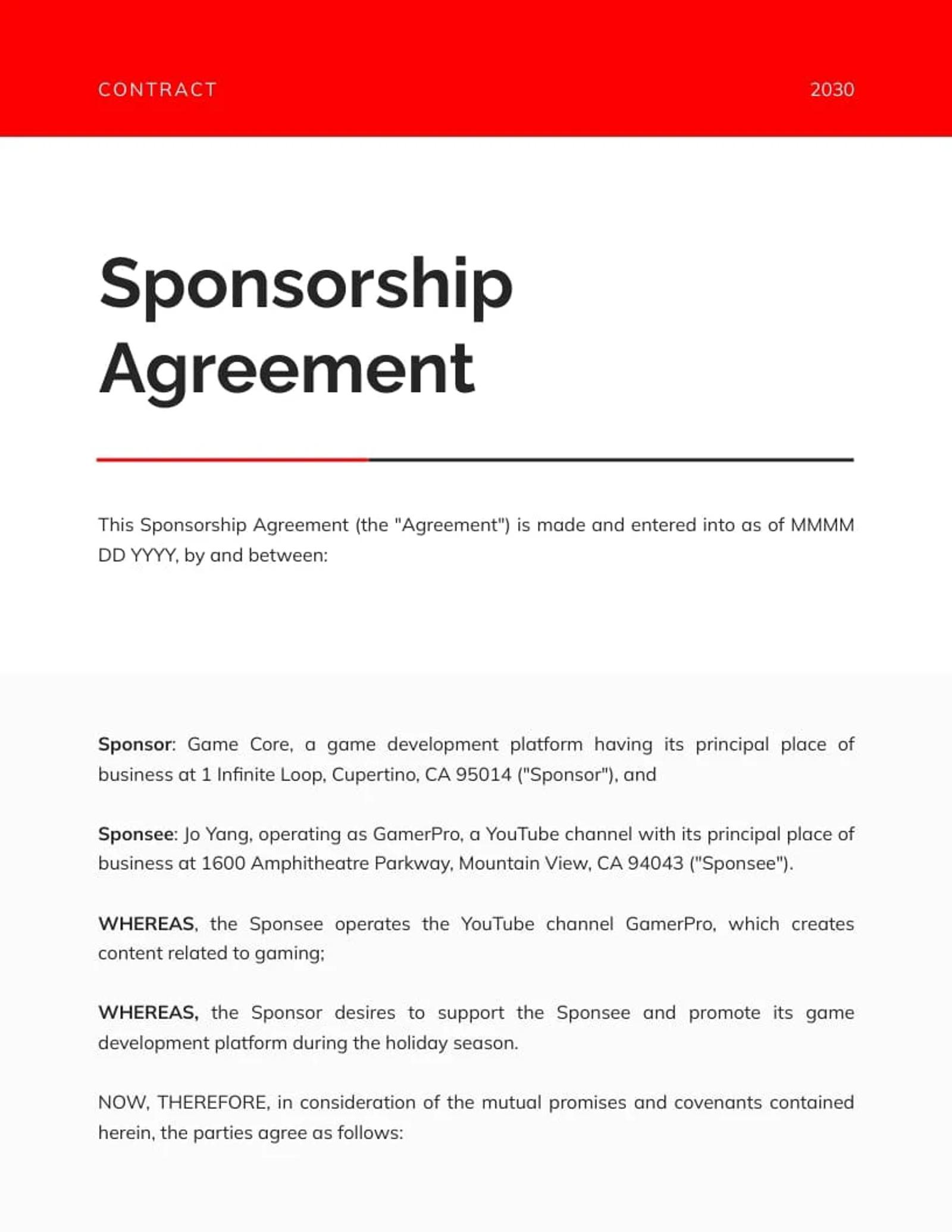
A YouTube sponsorship contract is the written agreement between a brand and a creator that defines what gets produced, when it ships, how much it costs, and what happens when something goes wrong. Most disputes in this space come from contracts that were vague on two or three specific clauses. Getting those clauses right the first time saves money and relationships.
This post is part of the pillar guide to YouTube creator sponsorships. It sits downstream of creator selection and pricing, and upstream of the brief and measurement. The contract is where the decisions made in the earlier steps become legally binding.
Nothing here is legal advice. It's the contract pattern we've seen work across hundreds of YouTube sponsorship deals, based partially on industry legal references and partially on what we've negotiated. Every brand should run their specific contract past an actual lawyer before signing.
The nine clauses that matter
Most YouTube sponsorship contracts have the same structural shell. A Master Creator Agreement (MCA) covers the creator-agency or creator-brand relationship. A per-campaign Work Order covers the specifics of each deal. Together they cover these nine clauses.
1. Scope and deliverables
What the creator will produce. Specific enough that both sides know when the deliverable is done. Bad: "a sponsored video." Good: "one 60 to 90 second mid-roll integration in an upcoming video on [topic category], published on the creator's main channel, with the brand mentioned for a minimum of 45 seconds, a visible URL in the description, and a pinned top comment with the promo code."
Be specific. Scope ambiguity is the single most common source of disputes at review time.
2. Compensation and payment terms
The fee, the structure (flat rate or CPM), and the payment schedule. Industry norm is 50 percent on contract signing and 50 percent on publish, or Net 30 to Net 45 from publish for single-payment deals. Some creators demand Net 0 (same-day payment) on signing; some brands push for Net 60. The middle is Net 30 to Net 45.
Specify the currency, the payment method (wire, ACH, PayPal, Wise), and who pays transaction fees. Cross-border deals often add 2 to 3 percent in bank fees that nobody discusses until invoicing.
3. View guarantee and makegood
If the deal is CPM-based or the flat rate is paired with a VG, the contract needs specific language on: the guarantee (what number of organic views, within what window), the measurement source (YouTube Studio, usually), and the makegood remedy (additional integration, extended promotion, partial refund). Details in view guarantees and makegood clauses: the real math.
4. Usage rights
The brand's right to use the creator's content after publish. Three variables:
- Term: how long the rights last. Industry norm is 12 months. Mid-tier creators often negotiate down to 6 months. Macro creators sometimes accept 24 months for a premium.
- Scope: what the brand can do. Organic social reshare is usually included. Paid-media usage (running the video as an ad on Meta, TikTok, YouTube Ads) is typically a separate line-item fee, often 15 to 50 percent of the base rate depending on term and reach.
- Modifications: whether the brand can edit the creator's content. Clipping to a 30-second highlight for social is usually fine. Re-editing to change the creative direction is not.
The creator should always retain ownership of the full video and their channel. The brand is licensing, not buying.
5. Exclusivity
How long the creator can't work with competitors after the deal.
Two patterns work:
- Category exclusivity for the measurement window. The creator can't take a direct competitor's deal for 30 to 60 days after publish. Standard and reasonable.
- Category exclusivity for an extended term. 6 to 12 months. Requires a premium, typically 25 to 100 percent on top of the base rate.
The definition of "competitor" must be specific. "Any brand in the same category" is too broad. "Any brand selling [exact product category] to [exact audience]" is better. Blanket category exclusivity kills creator relationships and signals the brand doesn't trust its own position.
6. Non-circumvention
Relevant for agency-brokered deals. Once the agency has introduced a creator to a brand, a non-circumvention clause prevents the creator and brand from cutting the agency out on direct deals. Industry norm is 3 to 12 months, per-Work-Order scope. 24 months is pushy. Blanket brand-wide or multi-year exclusivity is unreasonable.
Details on the philosophy behind this in non-exclusive creator representation.
7. FTC disclosure and compliance
US FTC rules require clear, conspicuous disclosure of sponsored content. The contract should explicitly require:
- Verbal disclosure in the video, typically in the first 30 seconds
- The YouTube "Includes paid promotion" toggle
- A pinned comment disclosing sponsorship if relevant
- Hashtags like #ad or #sponsored where applicable
Non-US deals still usually comply with FTC standards because the audience often includes US viewers and the creator's reputation depends on it. Brief the creator on the specific disclosure language, don't leave it to "follow applicable laws."
8. Revision limits and termination
Two rounds of notes is the industry norm. More than two signals scope creep. Contracts should specify the revision limit up front, because open-ended revisions are a back-door price cut on the creator.
Termination clauses cover what happens if either side needs to exit. Standard: 7-day cure period for material breach, proportional payment for work already completed, brand keeps any content produced and paid for, creator keeps ownership of everything unused. Include a kill fee (typically 25 to 50 percent of deal value) for brand-initiated cancellation after contract signing but before delivery.
9. Indemnification, confidentiality, and general provisions
The boilerplate. Mutual indemnification (both sides cover each other for third-party claims from their own breach), confidentiality (both sides protect each other's non-public information), governing law (which jurisdiction's law applies), and dispute resolution (arbitration clause if the brand prefers it).
Most brands use the same boilerplate across every creator deal. Creators usually sign without negotiating this section. That's fine, but both sides should read it at least once.
What to never sign
A contract without a kill fee cap. "Creator pays 100 percent of deal value if they cancel" is punitive and unreasonable. 25 to 50 percent is standard.
Unlimited revisions. "Subject to brand approval" with no revision cap means the brand can keep asking for changes until the creator gives up or runs out of patience. Specify 2 rounds maximum.
Blanket usage rights in perpetuity. "Brand may use in any medium, for any purpose, forever" is a buyout disguised as a license. The creator is selling their video without getting paid for it. Push back for 6 to 24 month terms.
Exclusivity clauses that aren't category-specific. "Creator may not work with any other brand" for 12 months is paying the creator to not work. If the brand wants blanket exclusivity, pay for it as a retainer, not inside a single sponsorship deal.
Payment contingent on performance past 45 days. "Final payment due 120 days after publish" is a brand problem, not a creator problem. The creator delivered the video; the creator gets paid within 45 days of publish. Performance bonuses paid later are fine; base fee is not.
What actually goes in the Work Order (per campaign)
An MCA covers the standing relationship. The Work Order covers each specific deal:
- Campaign name and brand
- Period and publication window
- Deliverables (specific video format, platform, placement, must-include)
- Timeline (rough cut 4 days before, final 2 days before, publish date)
- Compensation (fee, structure, payment schedule)
- View guarantee and makegood (if applicable)
- Exclusivity (category-specific, window-specific)
- Non-circumvention scope
- Usage rights (term, scope, modification rights)
Every new campaign with the same creator should have a new Work Order. Reusing the last one verbatim misses case-specific clauses (different exclusivity window, different usage rights for a launch campaign vs. a repeat cycle).
Quick answers
Do I need a lawyer for a single YouTube sponsorship deal? For deals under $5,000, a template contract is usually fine. For larger deals, involving legal is worth the cost, especially on usage rights and exclusivity clauses.
What's the industry standard for usage rights? 12 months organic licence. Paid-media usage is a separate fee. The creator retains ownership of the video and channel.
How long should exclusivity last? 30 to 90 days for category-specific exclusivity on competitors, tied to the measurement window. Longer periods require premium compensation.
Can I use the same contract for every creator? Master agreement plus per-campaign Work Order is cleaner than one-off contracts. MCA captures the standing relationship; Work Order captures campaign-specific clauses.
What happens if the creator misses the publish date? The contract should specify the remedy. Usual: a 7-day cure period, followed by either a renegotiated publish date or termination with partial payment for work completed.
Need help with a specific contract clause? Tell us the deal shape and we'll tell you what's normal and what's not.