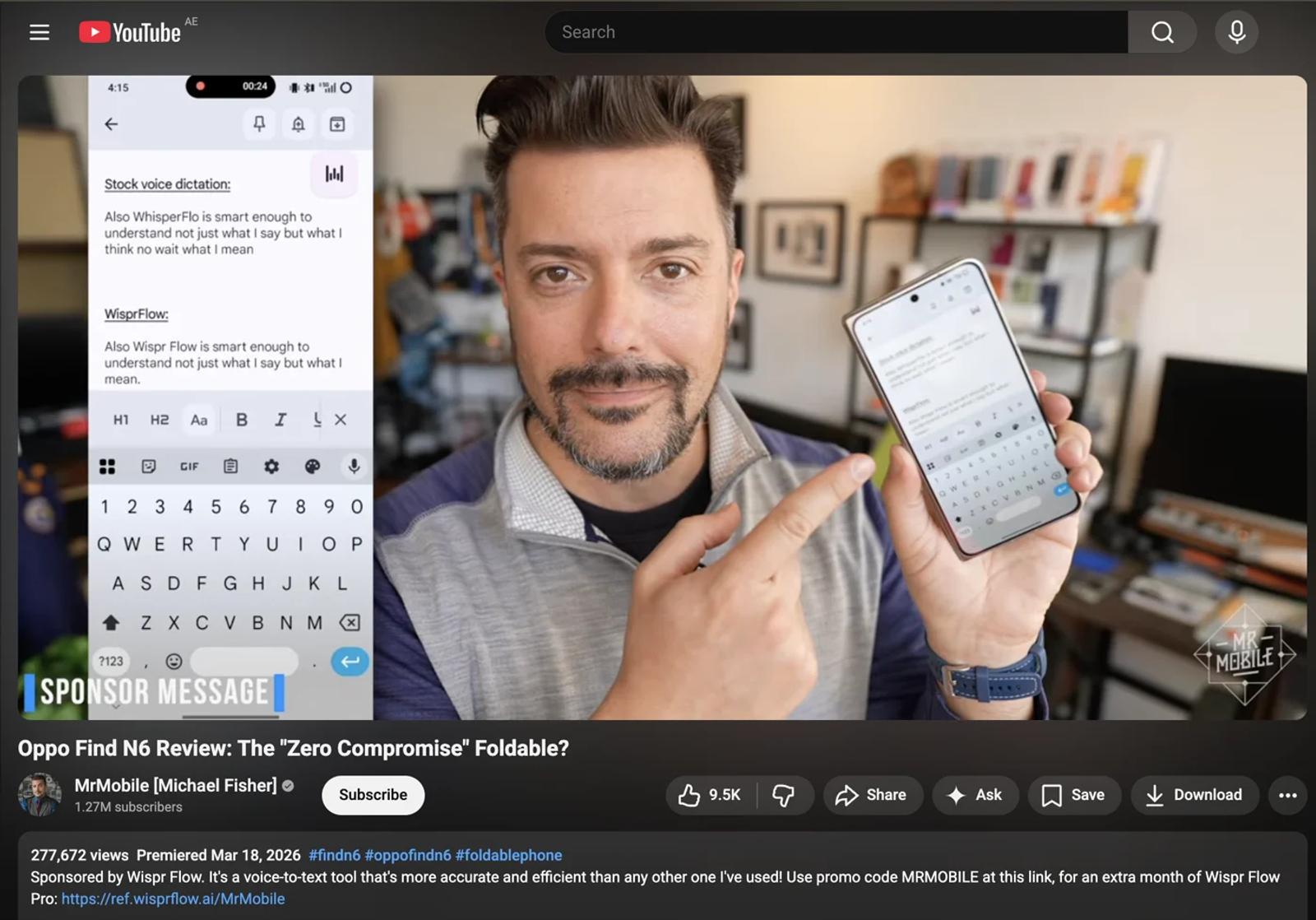
A YouTube creator sponsorship is a paid deal where a brand pays a YouTuber to produce or include branded content in their videos. It is the most common way brands reach engaged, opted-in audiences on the world's second-largest search engine, and it is not the same thing as running YouTube ads. Sponsorships live inside the creator's content. The audience chose to watch the creator. The ad read carries the creator's credibility, not the brand's.
This guide is the complete Letsreach playbook on how YouTube sponsorships actually work. It covers the five decisions every brand has to make, the end-to-end campaign process, what real deals look like, and the mistakes that cost the most money. Every section links to the deeper piece on that topic so you can read only what applies.
Why brands are spending more on YouTube
The short answer: YouTube sponsorships convert better than most other paid channels for audiences that trust specific creators. Influencer Marketing Hub's 2026 rate breakdown puts category CPMs in the $3 to $200 range (gaming low, finance and B2B SaaS high), and a 2025 tracking study found sponsored YouTube videos grew 54 percent year over year in the first half of 2025, generating 19 billion views across 66,000 uploads.
The reason this matters: when a viewer watches a creator they have chosen to subscribe to, the context of the recommendation is different than a pre-roll ad. The viewer is not trying to get past it. They are listening. A 60-second integration that ties a product to a real use case delivers a higher intent signal than most paid media formats that cost the same.
Letsreach runs hundreds of these deals a year across gaming, tech, developer tools, lifestyle, and entertainment. What follows is the structure underneath every one.
The five decisions every brand makes
Every YouTube sponsorship campaign comes down to five decisions. The order matters. Get them wrong and the rest of the campaign compensates for the wrong choice the whole way through. Get them right and the campaign runs itself.
Decision 1: Which creator
The creator choice drives everything else: rates, audience, performance, and what formats are even available. Getting this right depends on two things most brands never look at together. Niche fit (does the creator's audience care about this category at all?) and sponsor fit (has the creator run similar sponsorships, and how did those land?).
The lazy shortcut is to pick by subscriber count. That is usually wrong. A 500k subscriber mid-tier creator whose audience converts on developer tools beats a 5M subscriber general tech channel every time for a developer tool sponsorship. Subscribers are a ceiling on reach. They are not a proxy for fit.
The framework we use: tier first (how big of a platform does this campaign need?), then vertical, then individual creator. The tier sets the budget envelope. The vertical sets the audience profile. The individual creator has to clear a third bar, which is whether they have a track record of sponsored videos that landed.
Read the full breakdown: YouTube creator tiers: mega, macro, mid-tier, micro and how to pick the right YouTube creator for your brand.
Decision 2: Which format
Three main formats cover 95 percent of YouTube sponsorship deals: the 60 to 90 second integration, the full dedicated video, and the multi-month ambassador program. Each one solves a different problem.
Integrations are the most scalable and the most repeatable. They live inside the creator's usual video format, get measured in the first 45 days, and are easy to run across a roster of creators in a single campaign. Dedicated videos are better when the product needs to be demonstrated to be understood. Ambassador programs compound over months and are worth it only when the category benefits from repeat messaging.
Picking the wrong format is the single most expensive format-level mistake. A brand that needs product demos and picks integrations will spend the same money and see half the conversion. A brand that needs scaled reach and picks a single dedicated video will spend the same money and see a quarter of the reach.
Read the full breakdown: YouTube sponsorship formats: integrations, dedicated videos, and ambassador programs.
Decision 3: How to price it
Two pricing models dominate. Flat rate: the brand and creator agree a fixed fee based on expected views. CPM: the brand pays per thousand organic views delivered within a measurement window, usually with a cap. Flat rate is cleaner for budgeting. CPM is better when the brand is risk-averse and the creator has inconsistent view counts.
In practice most brands start with flat-rate deals. CPM deals need a view guarantee (the creator commits to a floor so the brand isn't overpaying against zero views) and a measurement window (usually 45 days). A makegood clause covers the case where the video underperforms: the creator produces an additional integration at no extra cost.
There is no standardized rate card. Industry guides correctly note these are negotiation clauses, not defaults. But across the hundreds of deals we run, the norms hold. Mid-tier tech creators: $4k to $10k for a 60 to 90 second integration. Macro creators: $10k to $30k. Mega gets specifically negotiated every time. Dedicated videos run 2x to 5x the integration rate.
Read the full breakdown: CPM vs flat rate for YouTube sponsorships and view guarantees and makegood clauses: the real math.
Decision 4: What the contract covers
The typical YouTube sponsorship contract has eight moving parts: scope, deliverables, compensation, IP and usage rights, non-circumvention, exclusivity, confidentiality, and termination. The ones worth paying attention to are IP and usage, non-circumvention, and exclusivity. Everything else is boilerplate.
IP and usage rights: most standard deals give the brand a 12-month organic license to share, quote, and excerpt the video. Paid-media usage (running the video as an ad on Meta or YouTube's own ad system) is almost always a separate line-item fee. Do not sign a contract that lets a brand run a creator's sponsored video as a paid ad without an explicit carveout.
Non-circumvention: brands sometimes push 24-month clauses. 3 to 12 months is the negotiable band. Per-Work-Order scope is better than blanket brand-wide.
Exclusivity: only enforce direct competitor exclusivity, and only for the measurement window. Blanket category exclusivity kills long-term creator relationships and signals the brand doesn't trust its own position.
Read the full breakdown: what a YouTube sponsorship contract should actually cover.
Decision 5: How to measure it
Views are the baseline number. They are not the campaign's success metric. The success metric depends on the campaign goal, and it is almost always one of three: promo code redemptions, tracked signup conversions, or ROAS Day 7.
Promo codes are the gold standard for direct-response campaigns. A clean promo code (unique per creator, clean UTM on the description link) lets the brand attribute revenue directly to that creator. Letsreach runs all Raycon integrations this way because the audio category converts on a code.
Tracked signup conversions are better for free-trial and freemium products. UTM on the description link, Plausible or Google Analytics conversion event on the signup, weekly reporting back to the brand.
ROAS Day 7 is the gaming-specific metric the biggest mid-core mobile publishers use. Seven days from video publish, how much in-game revenue came back from that creator's unique tracking link. Mid-single-digit ROAS is typical; high single digits is very good. We run gaming programs against this metric across multiple brands and multiple creators every month.
Read the full breakdown: how to measure a YouTube sponsorship campaign (promo codes, UTMs, ROAS).
How a campaign actually runs end to end
Between the brief and the live video, a YouTube sponsorship campaign runs through roughly 14 steps. For brands doing it themselves, each step is a decision point with a real failure mode. For brands using an agency, most of the steps disappear into a weekly update.
The short version:
- Discovery. Given a brand goal, produce a shortlist of 15 to 30 candidate creators. Filter by niche, audience demographic, sponsor history, average views, and recent cadence.
- Outreach. Personalized first email to each creator. No templates. The first line should reference something specific about the creator's recent work. Reply rates fall off a cliff without this.
- Rate negotiation. Creators quote. Brand counters. Usually settles within 2 to 3 rounds. View guarantee and measurement window get negotiated here too.
- Contract. Master Creator Agreement plus a per-campaign Work Order. 45-day payment window is the norm.
- Brief. Brand sends product context, talking points, must-include links, do-not-say constraints. Less prescriptive briefs produce better videos.
- Creative review. Creator shares rough cut 4 days before publish. Brand has 2 rounds of notes (1 is often enough, 3 is a signal of scope creep).
- Publish. Video goes live at the creator's regular cadence (usually Tuesday to Friday, not weekends). Tracked links active from minute zero.
- Week 1 check-in. Does the video look on track for the view guarantee? Does the promo code or tracked link show conversions?
- Day 45 measurement. View guarantee confirmed or missed. Makegood triggers if missed.
- Reporting. Campaign closeout deck: views, engagement, click-throughs, conversions, attributed revenue.
- Invoice and pay. Creator paid per contract terms. Brand invoiced per agreed schedule.
Read the deep version with every failure mode: the 14-step YouTube sponsorship campaign, from brief to live video.
What real campaigns look like
This is what the last year of real campaigns looks like for us, sanitized to what the clients have let us share.
Plarium × RAID: Shadow Legends. Monthly recurring campaign across 20+ YouTube creators in gaming, history, lifestyle, and entertainment verticals. Mix of flat-rate and CPM-based deals. Measured on ROAS Day 7 via the brand's attribution platform. Running every month.
Warp × JavaScript Mastery. Dedicated video plus integration inside long-form programming tutorials. JS Mastery's audience is active developers looking at terminal and dev environment tools. Two videos ran, signup conversion moved the brand's numbers meaningfully. Format was not the standard 60 to 90s ad spot; the creator's approach is full natural integrations across 3 to 4 hour tutorials, which is why developer-category deals run differently than consumer ones.
Raycon × lifestyle and tech creators. CPM-based deals with view guarantees, six creators across science, gaming, anime, and lifestyle verticals. Promo code tracking used per creator for attribution.
Wispr Flow × MrMobile. 60 second integration on a flagship Android review. This is the launch-window pattern: one large dedicated reviewer, one perfectly-timed video, high-intent audience exactly when the product becomes relevant to them.
Hungry Minds × Quinn's Ideas. Book launch campaign, single flagship integration. Small deal, tight fit between creator's history content and the book's subject.
These are five shapes of campaign. Not five campaigns doing the same thing. The Plarium pattern works because the audience compounds across repeat exposure. The Wispr pattern works because the audience overlap is extreme. Match the shape to the goal.
See all five in detail at case studies.
What goes wrong
Over the last year, three mistakes come up more than any other.
Mistake 1: Picking by subscriber count. Subscribers are a ceiling on reach, not a signal of conversion. A 5 million subscriber general channel with a general audience converts worse than a 150k subscriber channel whose audience already uses the product's category. The right filter is audience fit plus sponsor history, not size.
Mistake 2: Over-scripting the read. The creator's voice is what makes sponsored content convert. Brand teams sending approved paragraphs and requiring them verbatim produce ad-shaped content that the audience treats like an ad. The right approach: send product context and one hard rule (the call to action or a compliance line), let the creator write the rest. Review the rough cut, push back if needed.
Mistake 3: Cutting the measurement window too short. YouTube's long-tail views are real. A video that lands at 180k views in the first week can easily climb past 400k by day 45, especially on evergreen content. A 30-day window punishes evergreen content and pushes creators toward burst promotion tactics that are bad for both sides. 45 days is the industry-honest window.
Quick answers
How much does a YouTube sponsorship cost? The wide range is $500 to $200,000+ per video. Concentrated range for most mid-tier campaigns: $4,000 to $15,000 per integration. Dedicated videos run 2x to 5x. Ambassador programs are monthly and compound from there. The rate depends on creator tier, niche, and audience geography far more than on format alone.
How long does a YouTube sponsorship take from brief to live video? Integrations: 2 to 3 weeks. Dedicated videos: 3 to 4 weeks. Ambassador programs: 4 weeks to kick off, then monthly cadence. These are end-to-end including creator availability, contract, brief, production, and publishing slot.
Can a small brand run YouTube sponsorships? Yes. The micro-creator tier (10k to 100k subscribers) starts at around $500 per integration and converts extremely well for niche products. A brand with a $3,000 to $5,000 monthly budget can run 3 to 6 micro-creator integrations a month and scale from there.
Do I need an agency or can I run this in-house? Both work. In-house teams do better when the brand runs consistent monthly cadence with the same creators over long periods, because relationships compound. Agencies do better when the brand is running multi-vertical, multi-creator discovery at scale, or when the brand does not have the bandwidth to handle outreach, negotiation, and contracting on 10+ creators a month. Read the honest comparison at agency vs in-house YouTube influencer marketing.
What's the best format for a product launch? A dedicated video from one high-fit creator, with one or two integration backups on adjacent channels in the same vertical. The dedicated video does the narrative work. The integrations do the reach work.
How do I know if a creator is worth the rate they're quoting? Look at three numbers. Recent average views (last 10 uploads, not channel total). Engagement rate (likes plus comments divided by views; 2 percent and up is healthy). Sponsored video performance (pull 3 recent sponsored videos, compare their views to the creator's non-sponsored average; if sponsored videos average 40 percent of non-sponsored views, something is wrong).
Ready to talk through a specific campaign? Tell us what you're trying to hit and we'll put a roster together.