A YouTube creator tier is a rough bracket of audience size that predicts rates, engagement, and the kind of outcome a sponsorship will produce. The industry's four common brackets are mega (2M+ subscribers), macro (500K to 2M), mid-tier (100K to 500K), and micro (10K to 100K). Nano (1K to 10K) exists too, mostly for Instagram and TikTok work.
Subscriber count is the number brands look at first. It is also the wrong place to start.
A 10 million subscriber creator and a 100 thousand subscriber creator can both deliver, but they deliver different things. One buys you association. The other buys you conversion. Picking the wrong tier for the goal is the single most common reason a YouTube campaign underperforms.
The tier-to-engagement relationship is well documented: Influencer Marketing Hub and follow-up 2026 engagement-rate research consistently show micro creators running 2 to 3 times the engagement of mega accounts at roughly 1/10th the cost per post. That math is the whole reason the mid-tier-and-down play exists.
This is one of the five sponsorship decisions in the pillar guide to YouTube creator sponsorships. Tier is the "who," and it interacts tightly with format (the "what") and pricing model (the "how much"). Here is how the tiers actually break down and what each one is for.
Mega: 2M+ subscribers
This is MKBHD, Unbox Therapy, Kurzgesagt territory. 24 million plus subscribers. Massive reach. Instant credibility if the viewer knows the channel.
What it buys you: brand association. A mega creator picking up your product is a signal. The audience notices, competitors notice, industry notices. Useful for launches that want a flag-planting moment, or products that live or die on first-impression credibility.
What it does not buy you: cost-efficient conversion. A 20-million-subscriber channel runs an order of magnitude higher than a 1-million-subscriber channel, but the conversion rate per viewer is often lower. Audiences are broad. Buying intent is mixed.
Typical use: one dedicated video per year, often paired with PR. Treat it like a billboard with a receipt, not an acquisition channel.
Macro: 500K to 2M subscribers
JavaScript Mastery (1.2M), MrMobile (1.27M), most of the flagship channels in any niche.
What it buys you: authority plus scale. A macro creator is recognized as a voice in their category. They still have enough watch-time volume for conversion to matter. Their audience is more focused than a mega channel's.
What it does not buy you: a bargain. Macro creators charge seriously. View guarantees often cap lower than their average views because their audience has wider spread.
Typical use: the flagship creator of a campaign. The Warp dedicated video with JavaScript Mastery is exactly this play. Real conversion for developer tools because the audience showed up to learn, and the creator's recommendation carries weight inside that audience.
Mid-tier: 100K to 500K subscribers
The sweet spot for most campaigns.
What it buys you: best CPMs. Mid-tier creators tend to have the highest engagement rates per subscriber and the tightest audience fit. They have built enough volume to be worth integrating with, but not enough weight to command top rates.
What it does not buy you: instant name recognition. If your brief says the creator needs to move the market, mid-tier won't do that on its own.
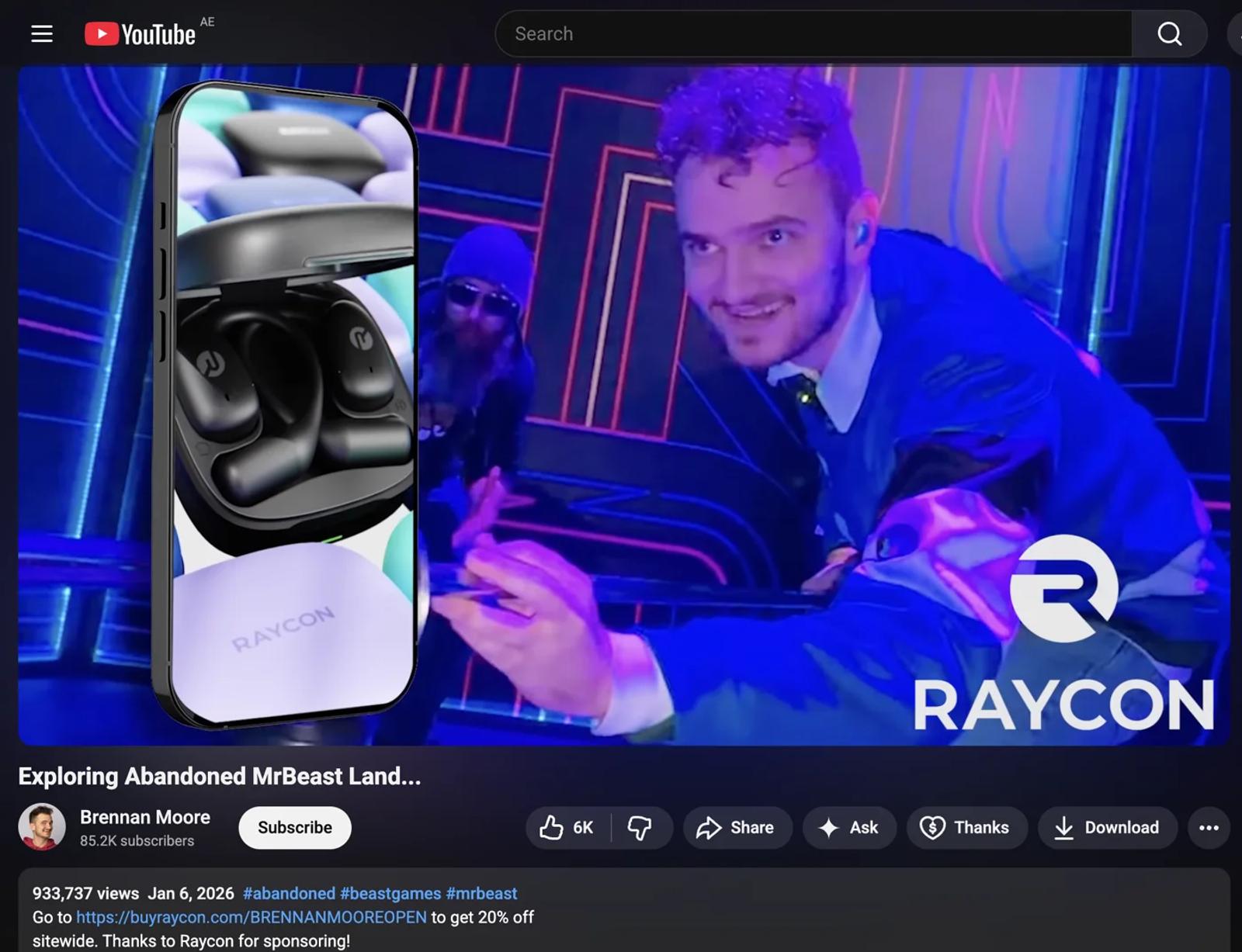
Typical use: the volume layer of a campaign. Pick six to twelve mid-tier creators across a vertical for monthly cadence. This is how the Raycon campaign runs: consistent mid-tier placements across lifestyle and tech, compounding into 2.5 million plus views across the program.
Micro: 10K to 100K subscribers
Niche creators with small but highly engaged audiences.
What it buys you: conversion. Engagement and trust run highest here. When a 50K subscriber creator recommends a product to their audience, the audience often acts. A lot of gaming, fitness, finance, and specialty-tech brands run most of their spend at this tier and never need to go higher.
What it does not buy you: awareness. A single micro creator reaches a small audience. If you want reach, you need ten of them. Logistically that is ten briefs, ten contracts, ten timelines.
Typical use: long-tail niche plays. Product launches into specific communities. Performance-led campaigns where CPM matters more than the name on the video.
The short version
| Tier | Subscribers | What it does best | What to watch |
|---|---|---|---|
| Mega | 2M+ | Brand association, launches with PR value | Cost per conversion is high |
| Macro | 500K to 2M | Authority plus scale, flagship of a campaign | Rates are serious; negotiate view guarantees carefully |
| Mid-tier | 100K to 500K | Highest CPM efficiency, tight audience fit | Needs multiple to build reach |
| Micro | 10K to 100K | Conversion, niche community access | Many creators to manage per unit of reach |
How to mix tiers
The best campaigns almost never use one tier. The pattern that works:
- One flagship creator (macro or mega) for the credibility moment
- Five to ten mid-tier creators for the volume layer
- Micro creators layered in when a brand needs category-specific reach the mid-tier can't cover
The mistake brands make: spending a full budget on one mega creator for a dedicated video, then wondering why the campaign felt small. One video on one channel in one week is small. The compounding effect comes from cadence across tiers.
Quick answers
Are mega creators worth it? For launches where the point is the signal, yes. For ongoing conversion spend, usually no. The return on a single mega placement is hard to justify against ten mid-tier placements for the same spend.
Why do mid-tier creators have the best CPMs? They have audiences big enough to be worth the production overhead but small enough that they're not commanding agency-rep pricing yet. Demand has not caught up to the ceiling of what they can deliver.
Can a micro creator drive real conversion? Yes, especially for niche products. A 40k subscriber automotive channel selling a car-care brand often converts harder per viewer than a 5M subscriber general tech channel ever could.
How many creators should a campaign use? Depends on goal, not budget. A product launch can be a single dedicated flagship. An ongoing brand presence campaign usually needs six to twelve creators in rotation to hit meaningful cumulative reach.
Want help picking the tier mix for your next campaign? Tell us the goal and we will put a roster together.